
Primea ReviewsAll Reviews

Primea Reviews is reader-supported. When you buy through our Amazon links we may earn a commission, at no extra cost to you. Rankings are set by our editors and never sold. Learn more

Ranked & Reviewed by Primea Reviews

The 5 Best USB Condenser Microphones for Calls, Streaming and Podcasts, Ranked & Reviewed

By the Primea Editorial TeamUpdated November 3, 20269 min read5 products ranked
The 5 Best USB Condenser Microphones for Calls, Streaming and Podcasts, Ranked & Reviewed

The short answer

The Logitech Blue Yeti is the USB condenser microphone to buy if you want four pickup patterns and 24-bit recording, and the Yeti Nano is the compact version for small desks. The TONOR TC310+ is the best complete kit with a boom arm and mute button, the FIFINE K669B is the cheap metal-bodied condenser, and a renewed Yeti is the budget route into the same capsule.

The Primea Scoreboard

Ranked & Reviewed

  1. Four pickup patterns, 24-bit/48kHz recording and a headphone monitoring jack on a true condenser capsule.

    93Outstanding
    Check price
  2. A true condenser in a compact body, with cardioid and omnidirectional patterns and a monitoring jack.

    90Excellent
    Check price
  3. A condenser with a boom arm, a tap-to-mute button, onboard gain and USB plug and play, in the $25 to $50 range.

    87Excellent
    Check price
  4. A metal-bodied cardioid condenser with 16-bit recording, for $25 to $50.

    84Very Good
    Check price
  5. The same four-pattern Yeti in a renewed, refurbished condition for less money.

    81Very Good
    Check price

A condenser microphone hears everything, and that is both its strength and its curse. It picks up the detail in your voice, and it also picks up your mechanical keyboard, the fan behind you and the room echo. Many people buy a condenser because it sounds better in a demo, then discover it sounds worse in an untreated spare bedroom. Know your room before you pick the microphone.

We reviewed eight listings and kept the five true USB condensers, setting aside three dynamic microphones that belong in a different category. We ranked the five on pickup patterns, recording quality figures, desk footprint, included accessories and how forgiving each is in a normal home office. Price buckets replace exact prices, and we note any gaps in the listings.

Before you buy

What Actually Matters

01

Pickup pattern

Cardioid hears what is in front of the microphone and rejects the rear, which suits one person at a desk. Omnidirectional hears the whole room, bidirectional hears front and back, and stereo records left and right. Choose the pattern that matches your recording situation, and check which are listed.

02

Room noise

Condensers are sensitive and reveal fans, keyboards and echo. A cardioid pattern, a boom arm and a softer room reduce the problem. If your room is loud and untreated, a dynamic microphone is the better tool, but that is a different product.

03

Bit depth and sample rate

24-bit/48kHz gives more headroom than 16-bit, so quiet and loud passages are captured with less distortion. For calls the difference is small, for podcasts and music it is worth having. Look for the figures in the spec list.

04

Monitoring and mute

A headphone jack on the mic lets you hear yourself with no delay, which keeps your voice natural when streaming. A hardware mute button, as on the TONOR, saves fumbling in software. Both are small features that are easy to appreciate once you have them.

05

Stand or boom arm

A desk stand picks up table vibration. A boom arm lifts the mic and puts it closer to your mouth. The TONOR kit includes one. If you buy a Yeti, consider adding an arm and a pop filter.

In-depth reviews

Our Ranked Picks, Reviewed

1

Best Overall Condenser

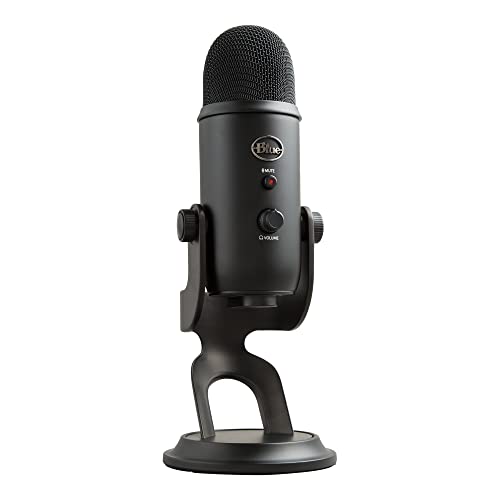
Logitech Blue Yeti USB Microphone (Midnight Blue)

Our verdict: Four pickup patterns, 24-bit/48kHz recording and a headphone monitoring jack on a true condenser capsule.

The Yeti is a true condenser microphone with four pickup patterns (cardioid, omnidirectional, bidirectional and stereo), 24-bit/48kHz recording, a built-in headphone monitoring jack and Blue VO!CE voice effects software.

Pattern flexibility is the reason it leads. Cardioid suits solo voice, bidirectional works for a two-person interview across the mic, omnidirectional captures a round table and stereo gives a wider image for music or ambient sound. The monitoring jack lets you hear yourself without delay, which is critical for streaming. The cost is size and room sensitivity: it is a large mic on a stand, and in an untreated room the omnidirectional and stereo modes pick up a lot of echo.

Buy it if you have a quiet room and want one microphone for calls, podcasts and music. Skip it if your desk is cramped or noisy.

Patterns
4: cardioid, omni, bidirectional, stereo
Recording
24-bit/48kHz
Capsule
True condenser
Monitoring
Headphone jack

What we like

  • +Four patterns suit many setups
  • +24-bit recording captures detail
  • +Headphone jack for zero-delay monitoring
  • +Plug and play on PC and Mac

Watch out for

  • −Large footprint on a small desk
  • −Picks up room echo and keyboard noise

Buy it if: Quiet rooms where pattern flexibility matters.

Skip it if: Your room is noisy or untreated.

2

Best Compact Condenser

Logitech Blue Yeti Nano USB Microphone (Blackout)

Our verdict: A true condenser in a compact body, with cardioid and omnidirectional patterns and a monitoring jack.

The Yeti Nano keeps the condenser capsule of its bigger sibling in a smaller desktop footprint. It offers two pickup patterns, cardioid and omnidirectional, plays on PC and Mac without drivers and includes a headphone monitoring jack.

It ranks second because the shrink is its whole appeal. A small desk, a laptop stand or a streaming corner has little room for the full Yeti. Cardioid covers most single-voice work, and omnidirectional handles a group at a table. The tradeoff is the loss of bidirectional and stereo modes, so interviews across a table or wide music capture are out. The listing does not state a recording bit depth, so compare that before assuming parity with the Yeti.

Buy it if you need the Blue sound on a small desk. Skip it if you want four patterns.

Patterns
2: cardioid and omnidirectional
Capsule
True condenser
Footprint
Compact desktop
Monitoring
Headphone jack

What we like

  • +Compact body fits tight desks
  • +True condenser capsule
  • +Cardioid and omni patterns
  • +Plug and play on PC and Mac

Watch out for

  • −Only two pickup patterns
  • −Bit depth is not listed

Buy it if: Small desks and solo voice work.

Skip it if: You need bidirectional or stereo modes.

3

Best Complete Kit

TONOR TC310+ Condenser Microphone Set with Boom Arm

Our verdict: A condenser with a boom arm, a tap-to-mute button, onboard gain and USB plug and play, in the $25 to $50 range.

The TC310+ is a true condenser set with an included boom arm, a tap-to-mute button with an RGB indicator and onboard gain control, over USB plug and play. It falls in the $25 to $50 range.

It comes third because completeness is what a beginner needs. The boom arm lifts the microphone off the desk, which cuts the thump of keyboard and table vibration, and puts it nearer your mouth. The mute button is handy on calls, and the gain knob on the mic lets you set level without opening software. It trails the Yeti models because the listing gives less detail on recording quality and pickup pattern, so assume a single cardioid-style capture.

Buy it if you want a ready-made streaming or call setup at a tiny price. Skip it if you need multiple patterns.

Capsule
True condenser
Included
Boom arm
Controls
Tap-to-mute, onboard gain
Connection
USB plug and play

What we like

  • +Boom arm included in the kit
  • +Tap-to-mute with RGB indicator
  • +Onboard gain control
  • +Very low price

Watch out for

  • −Recording specs not detailed
  • −Single-pattern capture assumed

Buy it if: Streamers who want a full kit cheaply.

Skip it if: You want pattern switching.

4

Best Budget Metal Body

FIFINE K669B Metal Condenser USB Microphone

Our verdict: A metal-bodied cardioid condenser with 16-bit recording, for $25 to $50.

The K669B is a true condenser with a metal body and a cardioid pickup pattern, recording at 16-bit and working with Mac and Windows. It is priced in the $25 to $50 range.

It places fourth because it offers a genuine condenser sound at a budget price without extras. The metal housing feels sturdier than plastic, and a single cardioid pattern is the right choice for most home recording since it rejects sound from behind. The weaknesses are the 16-bit depth, which has less headroom than 24-bit, and no stated mute button or headphone jack. If you move up from a headset, it is a big improvement.

Buy it if you want the cheapest real condenser for calls and voiceovers. Skip it if you want monitoring or mute controls on the mic.

Capsule
True condenser
Pattern
Cardioid
Recording
16-bit
Body
Metal

What we like

  • +Metal body feels sturdy
  • +Cardioid rejects rear noise
  • +Works with Mac and Windows
  • +Low price for a real condenser

Watch out for

  • −16-bit has less headroom
  • −No monitoring jack listed

Buy it if: Beginners upgrading from a headset mic.

Skip it if: You want zero-latency monitoring.

5

Best Budget Yeti

Blue Yeti USB Microphone, Blackout Edition (Renewed)

Our verdict: The same four-pattern Yeti in a renewed, refurbished condition for less money.

This is a renewed Blue Yeti in Blackout, with the same true condenser capsule, four pickup patterns, 24-bit/48kHz recording and headphone monitoring jack as the new unit. The listing marks it as renewed, meaning refurbished.

It ranks fifth only because of the condition. A refurbished mic has had a previous life, so its warranty and cosmetic state vary by seller. If the renewed grade is good, you get the headline Yeti features for less than the new model, and that is hard to beat for a cost-conscious buyer.

Buy it if you specifically want the Yeti's pattern flexibility and are comfortable with a refurbished unit. Check the seller's return policy and warranty before you click.

Patterns
4: cardioid, omni, bidirectional, stereo
Recording
24-bit/48kHz
Condition
Renewed
Monitoring
Headphone jack

What we like

  • +Full Yeti features for less
  • +Four pickup patterns
  • +24-bit/48kHz recording
  • +Headphone monitoring jack

Watch out for

  • −Refurbished condition varies
  • −Warranty depends on the seller

Buy it if: Buyers wanting a Yeti on a tighter budget.

Skip it if: You want a new unit with full warranty.

Methodology

How We Ranked These

Capsule and patterns

We counted pickup patterns, since flexibility changes how many jobs a single microphone can do.

Recording quality figures

24-bit/48kHz and 16-bit recording claims were compared, with unlisted figures treated cautiously.

Desk footprint and accessories

Compact bodies, boom arms, mute buttons and monitoring jacks were weighed against how each microphone fits a typical desk.

Room tolerance

We considered how forgiving each design is in an untreated home office, favoring tight cardioid patterns for noisy rooms.

Value

Feature depth was set against the $25 to $50 and $50 to $100 brackets, including the renewed Yeti.

Every Primea Score uses the same weights: Performance 30% · Build & Materials 20% · Everyday Usability 20% · Value 20% · Owner Satisfaction 10%. Full scoring rules

Buyer's guide

How to Pick the Right One for You

By Use

What you record decides how many pickup patterns you need.

UseOur pick
Podcast with a guestLogitech Blue Yeti USB Microphone (Midnight Blue)
Streaming or gamingTONOR TC310+ Condenser Microphone Set with Boom Arm
Video calls on a small deskLogitech Blue Yeti Nano USB Microphone (Blackout)
Voiceover on a tight budgetFIFINE K669B Metal Condenser USB Microphone

By Budget

SpendOur pick
$25 to $50 (kit)TONOR TC310+ Condenser Microphone Set with Boom Arm
$25 to $50 (microphone only)FIFINE K669B Metal Condenser USB Microphone
$50 to $100 (compact)Logitech Blue Yeti Nano USB Microphone (Blackout)
$50 to $100 (full Yeti)Logitech Blue Yeti USB Microphone (Midnight Blue)

Four Patterns vs Cardioid Only

Multiple patterns

One mic that adapts to solo, interview and ambient recording. Picks: Blue Yeti, Blue Yeti Renewed, Yeti Nano with two.

Cardioid only

Simple, forgiving and best in a noisy room. Picks: FIFINE K669B, TONOR TC310+.

Default to cardioid unless you record guests or ambient sound.

By Desk Space

SpaceOur pick
Tight or shared deskLogitech Blue Yeti Nano USB Microphone (Blackout)
Desk with a monitor armTONOR TC310+ Condenser Microphone Set with Boom Arm
Spacious deskLogitech Blue Yeti USB Microphone (Midnight Blue)
Temporary setupFIFINE K669B Metal Condenser USB Microphone

For Streamers Specifically

Look for

A hardware mute button, onboard gain, zero-delay monitoring and a way to lift the mic on an arm. A quiet room matters more than microphone price.

In this ranking

The TONOR TC310+ for the mute button and boom arm, and the Blue Yeti for monitoring and pattern choice.

When to Spend More

Spend more if

You record music, interviews or podcasts regularly and want pattern options and 24-bit capture. The Blue Yeti is the best of this group.

Save if

You mostly take calls and want better sound than a headset. The FIFINE K669B or the TONOR kit is enough.

Questions

Frequently Asked Questions

Does a USB condenser need an audio interface?+

No. These microphones have the preamp and converter built in and connect directly over USB. They work on Windows and Mac without extra hardware, and the Yeti models add a headphone jack for direct monitoring.

What is the biggest mistake when buying a condenser microphone?+

Putting it in an untreated room and expecting studio sound. Condensers hear echo, keyboard clicks and fan noise. Use a cardioid pattern, sit close to the mic and add soft furnishings near you.

Is the Blue Yeti worth it over the TONOR kit?+

If you need multiple pickup patterns and 24-bit recording, yes. The TONOR gives a boom arm and a mute button for far less. For solo calls or streaming, the TONOR kit is often enough.

How hard is setup?+

Plug in the USB cable, pick the mic as your input in the operating system or the app, and set the gain. Most people are ready in a couple of minutes, and a boom arm adds a clamp and a few screws.

Do I need a pop filter?+

It helps. Plosive sounds like p and b can overload a condenser, and a foam or mesh filter reduces them. Speak slightly off-axis, a few inches from the mic, if you do not have one.

Is a renewed Yeti a good buy?+

It can be, if the seller offers a clear return policy and warranty. The microphone is the same design, but a refurbished unit may show cosmetic wear. Check the renewed grade and what the seller covers.

Final take

For most people with a quiet room, the Logitech Blue Yeti is the best USB condenser microphone, thanks to four patterns, 24-bit recording and a monitoring jack. The Yeti Nano is the better fit for a small desk, and the TONOR TC310+ is the best low-cost kit with a boom arm and mute button. The FIFINE K669B and a renewed Yeti are the budget routes. Fix your room first, then fine-tune the microphone.

More Ranked & Reviewed Guides