
Primea ReviewsAll Reviews

Primea Reviews is reader-supported. When you buy through our Amazon links we may earn a commission, at no extra cost to you. Rankings are set by our editors and never sold. Learn more

Ranked & Reviewed by Primea Reviews

The 7 Best 8-Inch Studio Monitors of 2026, Ranked & Reviewed

By the Primea Editorial TeamUpdated November 4, 202610 min read7 products ranked
The 7 Best 8-Inch Studio Monitors of 2026, Ranked & Reviewed

The short answer

The Yamaha HS8 is the 8-inch monitor to beat, with a low end that reaches 38 Hz and a bi-amped design that stays composed when you turn it up. The KRK RP8G5 Rokit 8 is the better pick for untreated rooms thanks to 25 tuning combinations, and the JBL 308P MkII suits mixers who want boundary correction. For a Bluetooth-friendly creative desk, the Mackie CR8BT is the odd one out.

The Primea Scoreboard

Ranked & Reviewed

  1. 01
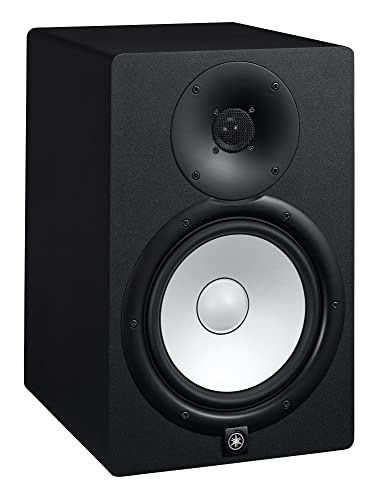
    Yamaha HS8

    Best Overall

    Yamaha HS8

    A 38 Hz to 30 kHz bi-amped workhorse that earns its place in the mix room.

    94Outstanding
    Check price
  2. 02
    KRK RP8G5 Rokit 8 Generation Five

    Best for Untreated Rooms

    KRK RP8G5 Rokit 8 Generation Five

    25 boundary and tuning EQ combinations make it the best fit for a problem room.

    92Outstanding
    Check price
  3. 03
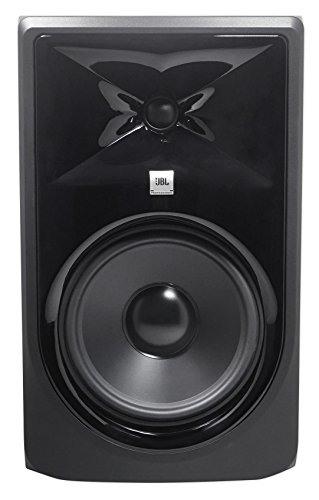
    JBL Professional 308P MkII

    Best for Boundary Correction

    JBL Professional 308P MkII

    112 W, magnetic shielding and boundary EQ in a clean-sounding two-way box.

    90Excellent
    Check price
  4. 04
    PreSonus Eris Studio 8

    Best Waveguide Design

    PreSonus Eris Studio 8

    A custom 120 by 60 degree waveguide keeps the stereo image stable off axis.

    88Excellent
    Check price
  5. 05
    Mackie CR8BT

    Best for Creative Desktops

    Mackie CR8BT

    Bluetooth and a tone knob make it the friendliest monitor here for casual use.

    85Excellent
    Check price
  6. 06
    Rockville APM8D

    Best Built-In Interface

    Rockville APM8D

    A 500 W MDF-cabinet pair with a USB audio interface built into the system.

    82Very Good
    Check price
  7. 07
    Rockville APM8B V2

    Best Entry Price

    Rockville APM8B V2

    A bi-amped 8-inch pair that gets you started, with limits on accuracy.

    80Very Good
    Check price

Most people who buy 8-inch monitors are solving the wrong problem. They want bigger bass, then park the speakers on a bedroom desk against a wall and discover that the low end is a boomy smear. An 8-inch woofer moves enough air to expose every flaw in a small room, so the monitor you pick matters less than whether it has the controls to fight your walls.

That is how we ranked this group. Primea editors reviewed seven powered 8-inch designs against the spec sheets and owner feedback, then scored them on low-frequency reach, room-correction tools, amplifier headroom and build. Brands with real boundary EQ and bi-amped drivers rose; boxes that promise wattage without explaining the tuning sank.

Before you buy

What Actually Matters

01

Low-frequency extension

This is how deep the speaker plays before output fades. A figure like 38 Hz means you hear most kick and bass fundamentals instead of guessing at them. Look for a published response range on the listing; if only wattage is shown, treat that as a gap and be cautious about buying for bass-heavy genres.

02

Boundary and room EQ

Switches or menus that cut bass buildup when a speaker sits near a wall or corner. Eight-inch woofers load a small room heavily, so this feature can be the difference between a clean mix and a muddy one. Check the product page for how many positions or combinations it offers, such as the KRK's 25.

03

Bi-amplification

Each driver gets its own amplifier, so a loud bass note cannot clip the tweeter. It keeps highs clean at volume and usually improves headroom. The Yamaha HS8 lists a 45 W high-frequency amp inside a 120 W system, which shows how the power is split.

04

Waveguide and baffle

The tweeter's waveguide controls dispersion, and the baffle shape reduces edge diffraction. A wide waveguide such as PreSonus's 120 by 60 degrees keeps the stereo image stable if you shift position. Check whether the listing states the dispersion angles, because they affect shared-desk listening.

05

Inputs and connectivity

Balanced XLR or TRS inputs suit a proper audio interface, while Bluetooth or USB suit casual sources. Match the connection to your chain: the Mackie adds Bluetooth, the Rockville APM8D adds USB. Confirm the connector type before ordering, because the wrong input forces an adapter or a noisy unbalanced cable.

In-depth reviews

Our Ranked Picks, Reviewed

1

Best Overall

Yamaha HS8

Our verdict: A 38 Hz to 30 kHz bi-amped workhorse that earns its place in the mix room.

The HS8 pairs an 8-inch cone woofer with a 1-inch dome tweeter and drives each with its own amplifier: 45 W for the highs and a 120 W total system rating. That bi-amped split matters because the woofer never starves the tweeter of power when a kick drum hits.

It tops this group because its 38 Hz to 30 kHz response gives you the most believable low end in the lineup without relying on a bass boost trick. The KRK below offers more room-tuning options, but the Yamaha is the one you can judge a mix on without constantly second-guessing the bottom octave.

Buy it if you mix music in a reasonably quiet room. The caveat is that it offers no wide boundary EQ matrix, so a bad corner position will still hurt the result.

Woofer
8-inch cone
Tweeter
1-inch dome
Frequency response
38 Hz to 30 kHz
Amplification
Bi-amped, 120 W system

What we like

  • +Low end reaches 38 Hz
  • +Bi-amped drivers keep highs clean
  • +Proven reference sound for mixing
  • +Strong output for its size

Watch out for

  • −Limited room-correction switches
  • −Needs desk decoupling in small rooms
  • −Plain styling

Buy it if: Music producers who mix at home and want a neutral, trusted reference.

Skip it if: Your room is untreated and you need heavy boundary tuning.

2

Best for Untreated Rooms

KRK RP8G5 Rokit 8 Generation Five

Our verdict: 25 boundary and tuning EQ combinations make it the best fit for a problem room.

The fifth-generation Rokit 8 uses an 8-inch woven Kevlar aramid fiber woofer and a low-diffraction baffle designed to cut edge distortion. Its calling card is 25 boundary and tuning EQ combinations, a bigger menu than most rivals offer.

That tuning range is why it lands second, not first. When a room has a bass bump or a rear wall too close, the Rokit gives you a way to tame it before you resort to acoustic panels. The Yamaha HS8 ranks higher for sheer neutrality, but it gives you far fewer ways to correct a bad space.

Choose it if your desk sits near a wall. The caveat is a tuned, slightly flattering character that some mix engineers find too inviting for critical decisions.

Woofer
8-inch Kevlar aramid fiber
Room tuning
25 EQ combinations
Baffle
Low diffraction design
Generation
Fifth (G5)

What we like

  • +25 boundary and tuning combinations
  • +Kevlar woofer resists flex
  • +Low diffraction baffle design
  • +Good for desk-against-wall setups

Watch out for

  • −Voicing can flatter the mix
  • −Menu takes patience to dial in
  • −Priced above entry brands

Buy it if: Home producers whose room has a boomy corner or close back wall.

Skip it if: You want a flat, unflattering reference with minimal tuning.

3

Best for Boundary Correction

JBL Professional 308P MkII

Our verdict: 112 W, magnetic shielding and boundary EQ in a clean-sounding two-way box.

The 308P MkII is a powered two-way reference monitor rated at 112 W, with updated high- and low-frequency transducers and a boundary EQ section aimed at desk and wall placement. Each cabinet is magnetically shielded.

That shielding is a quiet advantage for anyone with a CRT-era habit of placing speakers near monitors or hard drives, and the boundary EQ narrows the gap with the KRK above. It ranks third because the tuning menu is simpler than the Rokit's and the low end does not quote a figure as deep as the Yamaha's 38 Hz.

Recommended for mixers who want a modern JBL voice and need basic placement control. The caveat is that this listing does not state a frequency range, so check it against your bass needs.

Woofer
8-inch
Power
112 W, two-way
Shielding
Magnetic, each cabinet
Room control
Boundary EQ

What we like

  • +Magnetic shielding on each cabinet
  • +Boundary EQ for wall placement
  • +Updated transducers in the MkII
  • +Clean two-way voicing

Watch out for

  • −Fewer tuning options than KRK
  • −No quoted low-frequency extension
  • −Cabinet is large for small desks

Buy it if: Mixers who want a tidy JBL voice with simple placement correction.

Skip it if: You need a deep, specified low-frequency figure or heavy EQ tuning.

4

Best Waveguide Design

PreSonus Eris Studio 8

Our verdict: A custom 120 by 60 degree waveguide keeps the stereo image stable off axis.

The Eris Studio 8 is a 2-way active monitor built around an EBM waveguide tuned to 120 degrees horizontally and 60 degrees vertically. A waveguide shapes how the tweeter spreads sound, and a wide horizontal spread keeps the stereo image intact if you lean left or right.

It ranks below the JBL because the listing gives us fewer concrete figures on amplifier power and low-frequency reach, so we cannot credit it with the bottom end the others quote. Where it competes is imaging: it suits shared rooms, where two people sit off-center.

Buy it if you collaborate at the desk. The caveat is that the spec sheet in this listing does not publish an output rating, so compare it with the HS8 before you commit.

Size
8-inch, 2-way active
Waveguide
EBM, 120 x 60 degrees
Use
Music production
Class
Powered studio monitor

What we like

  • +Wide 120 degree horizontal waveguide
  • +Stable image off axis
  • +Superior high-frequency reproduction
  • +Familiar PreSonus studio voicing

Watch out for

  • −No output rating in listing
  • −Low-frequency range not stated
  • −Gets pricey versus Yamaha

Buy it if: Collaborators who share a mixing desk and sit off center.

Skip it if: You want published wattage and extension numbers before buying.

5

Best for Creative Desktops

Mackie CR8BT

Our verdict: Bluetooth and a tone knob make it the friendliest monitor here for casual use.

The CR8BT is billed as a creative reference monitor, an 8-inch powered speaker that connects to nearly anything and adds Bluetooth for streaming from a phone. A tone knob lets you shape the response without opening a menu.

That convenience is exactly why it sits fifth. Mackie positions it between studio and hi-fi, so it is less suited to critical mixing than the Yamaha, JBL or KRK ranked above it. It earns its place by being the one speaker here that also works as a living-room or creator-desk system.

Pick it when your 8-inch monitors double as a music source. The caveat is that wireless Bluetooth listening is not a substitute for a wired reference chain.

Size
8-inch powered
Wireless
Bluetooth
Tone control
Front tone knob
Class
Creative reference

What we like

  • +Bluetooth streaming built in
  • +Simple tone knob shaping
  • +Connects to nearly any source
  • +Works for casual listening too

Watch out for

  • −Less accurate than true studio monitors
  • −Tone knob is coarse for mixing
  • −No published frequency range

Buy it if: Streamers and creators who want one set of speakers for work and play.

Skip it if: You mix or master music for release.

6

Best Built-In Interface

Rockville APM8D

Our verdict: A 500 W MDF-cabinet pair with a USB audio interface built into the system.

The APM8D is a pair of 8-inch active monitors with a premium MDF wood cabinet and a built-in USB audio interface, so a laptop can plug straight into the speakers. It carries a headline figure of 500 W, which is a marketing peak number rather than continuous output.

It ranks sixth because adding the interface removes a purchase but not the need for a real audio converter if you record vocals. Against the APM8B V2 below it, the extra inputs and USB route give it more flexibility, though neither matches Yamaha for a trusted reference voice.

Best for a budget-conscious beginner who wants one purchase to start. The caveat is that the wattage claim should not be read as loudness you can rely on across the whole range.

Size
8-inch active pair
Quoted power
500 W
Cabinet
MDF wood
Connectivity
Built-in USB interface

What we like

  • +Built-in USB audio interface
  • +MDF cabinet damps resonance
  • +Versatile input selection
  • +Sold as a ready pair

Watch out for

  • −Headline wattage is a peak figure
  • −Not a neutral reference voice
  • −Built-in interface limits upgrades

Buy it if: Beginners who want speakers and a simple USB connection in one box.

Skip it if: You need an accurate reference for finishing mixes.

7

Best Entry Price

Rockville APM8B V2

Our verdict: A bi-amped 8-inch pair that gets you started, with limits on accuracy.

The APM8B V2 is a black 8-inch powered pair built around bi-amped performance, with separate amplification for the drivers and a pitch toward studio accuracy and range. Like the APM8D, it comes as a pair.

It lands last because the listing leans on marketing language, and the range and tuning details that mixers rely on are not stated. The APM8D above adds a USB interface and a wood cabinet, which is a more concrete reason to choose between the two Rockville models.

A fit for a first studio, a home theatre desk or a practice room where you want size more than precision. The caveat is that any high-stakes mixing should be checked on a better reference.

Size
8-inch powered pair
Design
Bi-amped
Finish
Black
Revision
V2

What we like

  • +Bi-amped driver design
  • +Sold as a complete pair
  • +Lowest-ranked tier price
  • +Simple setup for beginners

Watch out for

  • −Sparse published specifications
  • −Accuracy claims not backed by numbers
  • −Weaker brand track record

Buy it if: First-time buyers who want large speakers on a modest budget.

Skip it if: You need published frequency range and room tuning.

Methodology

How We Ranked These

Low-frequency reach

We favored monitors that publish a real bottom-end figure, like the Yamaha's 38 Hz, over those that only quote wattage.

Room-correction tools

Boundary and tuning EQ count heavily, because an 8-inch woofer exposes room problems quickly.

Amplifier design

Bi-amped designs that give the woofer and tweeter separate power scored above single-amp builds.

Build and cabinet

Cabinet material, driver construction and shielding were weighed against price.

Spec transparency

Listings that explain their numbers earned more trust than those relying on marketing claims.

Every Primea Score uses the same weights: Performance 30% · Build & Materials 20% · Everyday Usability 20% · Value 20% · Owner Satisfaction 10%. Full scoring rules

Buyer's guide

How to Pick the Right One for You

By Room Situation

The room should decide the model before the brand does.

RoomOur pick
Treated or well-damped roomYamaha HS8
Desk near a wall or cornerKRK RP8G5 Rokit 8
Shared desk, two listenersPreSonus Eris Studio 8
Mixed-use creative deskMackie CR8BT

By Budget

SpendOur pick
Entry, ready pairRockville APM8B V2
Budget with USB connectionRockville APM8D
Core studio tier ($200 to $500)Yamaha HS8
Core studio tier with room tuningKRK RP8G5 Rokit 8

Neutral Reference vs Tuned Voicing

Neutral reference

Aims to show the mix as it is. Best represented by the Yamaha HS8, where the bi-amped design and specified 38 Hz reach support accurate decisions.

Tuned voicing

Shapes the response to flatter the room or the listener. The KRK RP8G5 and Mackie CR8BT lean this way, with tuning menus and a tone knob.

If you mix for release, start with the Yamaha. Pick the KRK when your room needs correction.

By Connection Type

SourceOur pick
Audio interface with balanced outputsJBL Professional 308P MkII
Laptop straight into the speakersRockville APM8D
Phone or tablet streamingMackie CR8BT
Pro interface and monitor controllerYamaha HS8

For Home Mixing Specifically

Look for

A published frequency range, boundary EQ and a bi-amped design. These three decide whether an 8-inch speaker helps or hurts in a small room.

In this ranking

The Yamaha HS8 covers range and bi-amping, the KRK RP8G5 covers room tuning, and the JBL 308P MkII covers boundary EQ with magnetic shielding.

When to Spend More

Spend more if

You mix for release or in an untreated room. The Yamaha HS8 or KRK RP8G5 give you the range and correction tools that cheaper pairs lack.

Save if

You monitor casually or write ideas. The Rockville APM8B V2 or Mackie CR8BT cover that need without the studio price.

Questions

Frequently Asked Questions

Do I need 8-inch monitors or are 5-inch enough?+

Eight-inch woofers like the Yamaha HS8's reach lower, with 38 Hz quoted, but they need space. In a small bedroom the extra bass can overwhelm the room, so choose the KRK Rokit 8 for its tuning options or step down in size.

What is the most common mistake when placing these?+

Pushing them against a wall. Close boundaries boost bass by several decibels, which hides mix problems. Pull the speakers away or use the boundary EQ on the JBL 308P MkII or KRK Rokit 8 to compensate.

Are the Rockville monitors worth it over a Yamaha HS8?+

Only if budget is the main limit. The APM8D adds a USB interface and wood cabinet, but its 500 W figure is not a continuous rating. The Yamaha publishes a 38 Hz to 30 kHz range, which is more trustworthy for mixing.

How do I connect the Mackie CR8BT?+

The CR8BT connects to just about anything, including Bluetooth sources and wired inputs. For critical work use the wired connection, since Bluetooth adds compression and delay. Use the tone knob to shape the sound, then return it to neutral when judging a mix.

How do I keep these from vibrating the desk?+

Place isolation pads or stands under each cabinet and keep them away from the desk surface. The PreSonus Eris Studio 8 and Yamaha HS8 are both large enough that a resonant desktop can add false bass, which stands reduce.

Can I use these in a living room as hi-fi speakers?+

The Mackie CR8BT is the sensible choice since it adds Bluetooth and a tone knob. Studio monitors like the HS8 can play music but are voiced to reveal flaws, so poor recordings may sound harsh through them.

Final take

The Yamaha HS8 is the 8-inch monitor that most home studios should buy, because it publishes the range and bi-amped design that mixing depends on. The KRK RP8G5 Rokit 8 takes over when your room is the problem, and the JBL 308P MkII suits anyone who wants shielding with boundary EQ. Treat the Rockville pairs as entry options and the Mackie CR8BT as a creator speaker, not a reference.

More Ranked & Reviewed Guides