

Primea ReviewsAll Reviews

Primea Reviews is reader-supported. When you buy through our Amazon links we may earn a commission, at no extra cost to you. Rankings are set by our editors and never sold. Learn more

Ranked & Reviewed by Primea Reviews

The 6 Best Portable Chargers Under $30 for Phones, Travel and Outages, Ranked & Reviewed

Joshua ParkesBy Joshua Parkes, Editor in ChiefUpdated November 11, 20269 min read6 products ranked
The 6 Best Portable Chargers Under $30 for Phones, Travel and Outages, Ranked & Reviewed

The short answer

The Szfakuer 10000mAh slim power bank is the portable charger to buy for most people, with 22.5W USB-C charging, a 0.63 inch body and 8.11 oz weight. The citicr adds built-in cables and a fold-out wall plug, the VRURC four-cable model suits mixed devices, the IAPOS packs 40000mAh for outages and the Miady is a slim magnetic top-up.

The Primea Scoreboard

Ranked & Reviewed

  1. A 0.63 inch, 8.11 oz pack with 22.5W USB-C PD3.0 and QC4+ and three ports.

    94Outstanding
    Check price
  2. 02
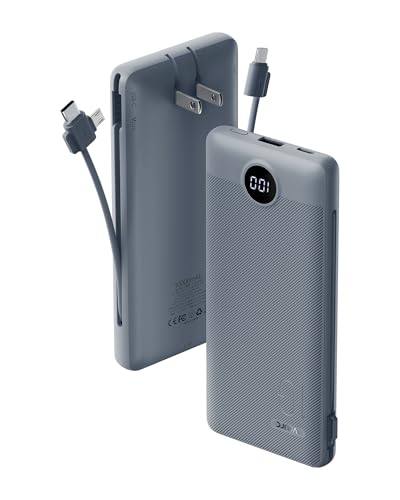
    citicr 10000mAh PD20W Power Bank

    Built-in iOS and USB-C cables, PD20W fast charging and a fold-out AC wall plug.

    92Outstanding
    Check price
  3. Four built-in cables including Micro USB and USB-C, five outputs and a lanyard.

    90Excellent
    Check price
  4. A 10000mAh pack with a built-in AC plug, Micro USB and USB-C cables and 2.5 to 4 phone charges.

    88Excellent
    Check price
  5. A 40000mAh pack with a 22.5W USB-A port, a 22W USB-C PD port and three devices at once.

    86Excellent
    Check price
  6. 06
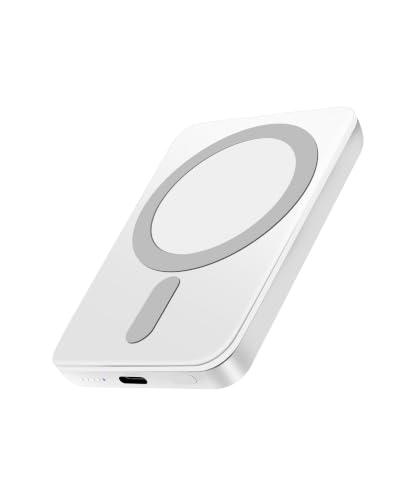
    Miady 5000mAh Magnetic Power Bank

    A 0.55 inch, credit-card-size magnetic pack with 5W wireless charging and five indicator lights.

    83Very Good
    Check price

Capacity is the number everyone compares and the one that misleads most. A 10000mAh charger does not deliver 10000mAh to your phone, because the cells run at about 3.7V and the output runs at 5V or more, and conversion loses some on the way. The honest expectation is roughly two to three phone charges from a 10000mAh pack. Treat the maker's estimate of phone charges as the useful number, and discount it slightly.

So this ranking weighs charging speed, size and the cables you will actually carry, alongside capacity. We reviewed six portable chargers priced under $30 from their listings, comparing mAh, output wattage, port types, built-in cables and recharging method. The numbers on the box are maker claims, and real-world output depends on the cable and the phone.

Before you buy

What Actually Matters

01

Usable capacity

A 10000mAh pack is rated at the cell voltage of about 3.7V, and the output runs at 5V or more, so you get roughly two to three phone charges. Wireless charging loses more. Judge by the maker's charge estimate, and expect less than the printed number. Cable quality can cap charging below the port's rating, so pair a USB-C pack like the Szfakuer with a good cable.

02

Charging speed

A 22.5W USB-C PD output charges a modern phone far faster than a 2.4A port. A phone only charges as fast as its own limit and the cable allow. Look for PD3.0 or QC4+ on the listing, and use a cable rated for the speed. A phone's own limit sets the speed: a 22.5W output cannot push faster than the phone accepts.

03

Built-in cables

Built-in cables save you from forgetting one, but a frayed lead cannot be replaced. They also fix the connector types you can use. Check which connectors are built in, and carry a spare cable if the pack depends on them. Built-in iOS or USB-C leads, as on the citicr and VRURC, save carrying one, but they cannot be swapped if one breaks.

04

Recharging the bank

A 10000mAh pack takes several hours to refill from a phone-style adapter. A fold-out wall plug lets you recharge from any outlet without a charger. Check how the bank recharges and whether the USB-C port works in both directions. Check that the pack charges while it powers a device, called pass-through, if you plan to run it from a wall plug overnight.

05

Airline limits

Most airlines allow power banks up to 100Wh in the cabin, which is about 27000mAh at 3.7V. Larger packs are restricted, and power banks must go in carry-on, not checked bags. Check the capacity before travelling with a 40000mAh pack. A 10000mAh pack stays well under that limit, while the IAPOS at 40000mAh does not, so read the rule before travelling.

In-depth reviews

Our Ranked Picks, Reviewed

1

Best Overall

Szfakuer 10000mAh Slim Power Bank

Our verdict: A 0.63 inch, 8.11 oz pack with 22.5W USB-C PD3.0 and QC4+ and three ports.

The Szfakuer holds 10000mAh and charges at up to 22.5W over USB-C with PD3.0 and QC4+. It has two USB-A ports and one USB-C, and measures 0.63 inches thick at 8.11 oz.

It ranks first because 22.5W USB-C is the fastest output in this group short of the IAPOS, and a body under an inch thick fits a jacket pocket. PD3.0 and QC4+ cover most modern phones, and three ports let two devices charge at once. It has no built-in cable, unlike the citicr, so you must carry your own.

Buy it for everyday carry if you already own a good USB-C cable and want speed and size. Without a cable of your own, the citicr is more convenient.

Capacity
10000mAh
Fast charging
22.5W USB-C PD3.0 and QC4+
Ports
2 USB-A plus 1 USB-C
Size
0.63 in thick, 8.11 oz

What we like

  • +22.5W USB-C fast charging
  • +Slim 0.63 inch body
  • +Three ports, two devices at once
  • +PD3.0 and QC4+ support

Watch out for

  • −No built-in cable
  • −No wall plug for recharging

Buy it if: Everyday carry for owners who already have a good USB-C cable.

Skip it if: You want cables or a wall plug built in.

2

Best Built-In Cables

citicr 10000mAh PD20W Power Bank

Our verdict: Built-in iOS and USB-C cables, PD20W fast charging and a fold-out AC wall plug.

The citicr holds 10000mAh, offers PD20W and 22.5W fast charging, and has one iOS and one USB-C cable built in. It recharges through a fold-out AC wall plug.

It ranks second because it removes the two things people forget: a cable and a wall charger. The built-in iOS and USB-C leads cover iPhone and Android, and the fold-out plug means the bank recharges from any outlet without extra gear. It is slower than the Szfakuer on the USB-C port, and built-in cables are a common failure point, since a frayed lead cannot be replaced.

It suits a household with both iPhones and Android phones that wants nothing else in the bag. Treat the built-in leads as the weak link.

Capacity
10000mAh
Fast charging
PD20W and 22.5W
Cables
1 iOS plus 1 USB-C built in
Recharging
Fold-out AC wall plug

What we like

  • +iOS and USB-C cables built in
  • +Fold-out AC wall plug
  • +PD20W fast charging
  • +Works with iPhone and Android

Watch out for

  • −Built-in cables cannot be replaced
  • −Slower than the Szfakuer

Buy it if: Anyone who wants one device for iPhone and Android with wall recharging.

Skip it if: You prefer to use your own cables.

3

Best for Mixed Devices

VRURC 10000mAh Power Bank with 4 Built-In Cables

Our verdict: Four built-in cables including Micro USB and USB-C, five outputs and a lanyard.

The VRURC holds 10000mAh with four built-in cables, including Micro USB and USB-C, and five charging outputs. A lanyard is included, and the USB-C port works in and out at 2.4A.

It ranks third because it covers devices that other banks ignore, such as older Micro USB earbuds, cameras and e-readers, alongside current phones. The USB-C port charges the bank as well as drawing power out. At 2.4A it is limited to basic speeds, nowhere near the Szfakuer's 22.5W, so a modern phone charges slowly.

Pick it for a family or traveler juggling older Micro USB gear and newer USB-C devices. Fast charging is not its strength.

Capacity
10000mAh
Cables
4 built in, incl. Micro USB and USB-C
Outputs
5 charging options
USB-C port
In and out, 2.4A

What we like

  • +Four built-in cables
  • +Covers Micro USB gear
  • +Five charging outputs
  • +Lanyard included

Watch out for

  • −2.4A is slow for new phones
  • −Built-in cables can fray

Buy it if: Families or travelers with older Micro USB gear and newer USB-C devices.

Skip it if: You want fast charging for a modern phone.

4

Best Wall-Plug Combo

VRURC 10000mAh Power Bank with AC Wall Plug

Our verdict: A 10000mAh pack with a built-in AC plug, Micro USB and USB-C cables and 2.5 to 4 phone charges.

This VRURC holds 10000mAh and folds an AC wall plug into the body, alongside Micro USB and Type-C leads and spare data cables. The maker estimates 2.5 to 4 phone charges.

It ranks fourth because the wall plug makes it a charger and a power bank in one device: plug it into the wall to recharge it, then take it out for the day. The 2.5 to 4 charge estimate is realistic for a 10000mAh pack. It sits behind the citicr because it has no iOS lead and no stated fast-charge wattage, and it sits in the higher $25 to $50 bucket.

Choose it if you want the wall charger and the cable gone from your bag. Check the price, since it sits at the top of the $30 limit.

Capacity
10000mAh
Recharging
Integrated AC wall plug
Cables
Micro USB and Type-C built in
Estimated use
2.5 to 4 phone charges

What we like

  • +Wall plug built in
  • +Micro USB and Type-C cables
  • +Extra data cables included
  • +Realistic charge estimate

Watch out for

  • −No iOS cable
  • −Fast-charge wattage not stated

Buy it if: Travelers who want one piece of gear instead of a charger plus a cord.

Skip it if: You use an iPhone with a Lightning port.

5

Best for Outages

IAPOS 40000mAh 22.5W Power Bank

Our verdict: A 40000mAh pack with a 22.5W USB-A port, a 22W USB-C PD port and three devices at once.

The IAPOS holds 40000mAh, with a 22.5W USB-A output, a 22W USB-C PD output and three simultaneous devices.

It ranks fifth because the size is its reason for being: 40000mAh is about four times a typical pack, enough for days of phone use in an outage or on a camping trip. The 22W USB-C PD output also charges a phone quickly. The tradeoff is weight and the airline rules, since a pack over 100Wh is restricted on flights, and 40000mAh at the usual 3.7V is about 148Wh. It is heavy to carry daily.

It is the pick for camping trips, long drives and storm season, when days of power matter more than weight. Do not plan to fly with it.

Capacity
40000mAh
USB-A output
22.5W
USB-C output
22W PD
Charges at once
3 devices

What we like

  • +Huge 40000mAh capacity
  • +22W USB-C PD output
  • +Charges three devices at once
  • +Days of power in outages

Watch out for

  • −Heavy for daily carry
  • −Over the usual airline limit

Buy it if: Campers, drivers and outage planners who want days of power.

Skip it if: You travel by air or want a pocket-size pack.

6

Best Magnetic Top-Up

Miady 5000mAh Magnetic Power Bank

Our verdict: A 0.55 inch, credit-card-size magnetic pack with 5W wireless charging and five indicator lights.

The Miady holds 5000mAh, snaps on magnetically and charges wirelessly at 5W. It is 0.55 inches thin and credit card size, with five indicator lights that show 25 percent each.

It ranks last because 5000mAh is half the capacity of the others and 5W wireless is slow, so it tops up rather than recharges. Its strength is convenience: it stays on the back of a phone with no cable. Wireless charging is also less efficient than wired, which cuts the usable charge further, and a case can weaken the magnetic hold.

Buy it for an iPhone owner who wants a slim, cable-free top-up that stays attached. For a full recharge, take a 10000mAh pack.

Capacity
5000mAh
Wireless charging
5W magnetic pad
Thickness
0.55 in, credit card size
Indicator
5 lights, 25% each

What we like

  • +Snaps on magnetically
  • +No cable needed
  • +Very slim at 0.55 inches
  • +Five-light battery indicator

Watch out for

  • −Only 5000mAh capacity
  • −Slow 5W wireless output

Buy it if: iPhone owners who want a slim top-up that stays on the phone.

Skip it if: You need a full recharge or fast charging.

Methodology

How We Ranked These

Capacity

We compared mAh from 5000 to 40000, remembering that usable output is lower than the printed figure.

Charging speed

Output wattage and standards such as PD3.0 and QC4+ determine how quickly a modern phone charges.

Cables and plugs

Built-in cables and wall plugs add convenience but can fray or limit compatibility, so we weighed both sides.

Size and weight

Thickness and ounces decide whether the pack stays in a pocket or stays in a drawer.

Port variety

The mix of USB-C, USB-A, Micro USB and wireless decides how many of your devices it can charge.

Every Primea Score uses the same weights: Performance 30% · Build & Materials 20% · Everyday Usability 20% · Value 20% · Owner Satisfaction 10%. Full scoring rules

Buyer's guide

How to Pick the Right One for You

By Capacity Needed

How long you need to go without a wall decides the size.

NeedOur pick
A quick top-upMiady 5000mAh Magnetic Power Bank
A day out, 2 to 3 chargesSzfakuer 10000mAh Slim Power Bank
A long trip with several devicesVRURC 10000mAh Power Bank with 4 Built-In Cables
Days of power or an outageIAPOS 40000mAh 22.5W Power Bank

Built-In Cables vs Your Own

Built-in cables

Nothing to forget and no cable to lose, but a damaged lead is not replaceable, and the connectors are fixed. Picks: citicr, VRURC with 4 cables, VRURC with AC plug.

Your own cables

More flexible and replaceable, with faster USB-C PD, but you must carry the cable. Picks: Szfakuer, IAPOS.

Default to your own cable if you want fast charging, and built-in if you hate forgetting one.

By Phone Type

PhoneOur pick
Modern Android, USB-CSzfakuer 10000mAh Slim Power Bank
iPhone, Lightningciticr 10000mAh PD20W Power Bank
iPhone with MagSafe-style backMiady 5000mAh Magnetic Power Bank
Older Micro USB devicesVRURC 10000mAh Power Bank with 4 Built-In Cables

For Travel Specifically

Look for

A pack under about 27000mAh so it is accepted in the cabin, a slim body and fast USB-C. Pack it in carry-on, never in checked bags.

In this ranking

Szfakuer for a slim pack, citicr for a built-in wall plug, and avoid the 40000mAh IAPOS for flights.

When to Spend More

Spend more if

You want one device to replace the wall charger and cable. The VRURC with AC plug does that.

Save if

You just need a slim emergency top-up. The Szfakuer or Miady is enough for under $25.

Questions

Frequently Asked Questions

How many phone charges will I get from 10000mAh?+

Roughly two to three, which matches the VRURC's estimate of 2.5 to 4. The Szfakuer and citicr are rated at 10000mAh, but conversion losses mean you never get the full figure. Run times also depend on the phone's battery size.

What is the commonest mistake?+

Buying on capacity alone. A 40000mAh IAPOS is a big pack that you cannot take on a plane, and a 2.4A port on the VRURC charges a modern phone slowly. Check speed and size too. The 2.4A port is the limit to check on the VRURC.

Is a portable charger worth it over a case battery?+

A separate bank like the Szfakuer works with any phone and doubles as a backup for other devices. A case battery is neater but ties you to one phone model and adds bulk. Case batteries cost more and cannot charge earbuds or tablets.

How do I charge the bank itself?+

Use the USB-C input, or the fold-out wall plug on the citicr and VRURC AC model. A 10000mAh pack takes several hours, so plug it in overnight, and unplug it when it is full.

How do I maintain a power bank?+

Keep it away from heat and water, and charge it every few months even when unused. Replace any bank that swells or gets very hot. Check built-in cables for fraying. Do not leave the pack in a hot car.

Can I take it on a plane?+

Banks of 10000mAh like the Szfakuer are fine in carry-on. Packs above 100Wh, such as the 40000mAh IAPOS, are restricted by most airlines. Always carry power banks in the cabin, not checked bags. Keep the IAPOS out of checked luggage, and read your airline rules.

Final take

The Szfakuer is the best portable charger for most people, because it combines 22.5W USB-C speed with a slim 0.63 inch body. The citicr is the better choice if you never want to carry a cable or a wall plug. The IAPOS is for outages and camping, and the Miady is a magnetic top-up only.

About the author

Joshua Parkes, Editor in Chief at Primea Reviews

Joshua Parkes

Editor in Chief, Primea Reviews

Joshua owns the Primea Score framework and signs off on every ranking this site publishes. He and the editors work from spec sheets, manuals, warranty terms, certifications and long-term owner feedback, and a guide says so plainly when a listing leaves out the number that decides the purchase. Primea never claims to have physically tested a product it has not, and no brand can pay for placement.

More Ranked & Reviewed Guides